
Sep 4, 2026
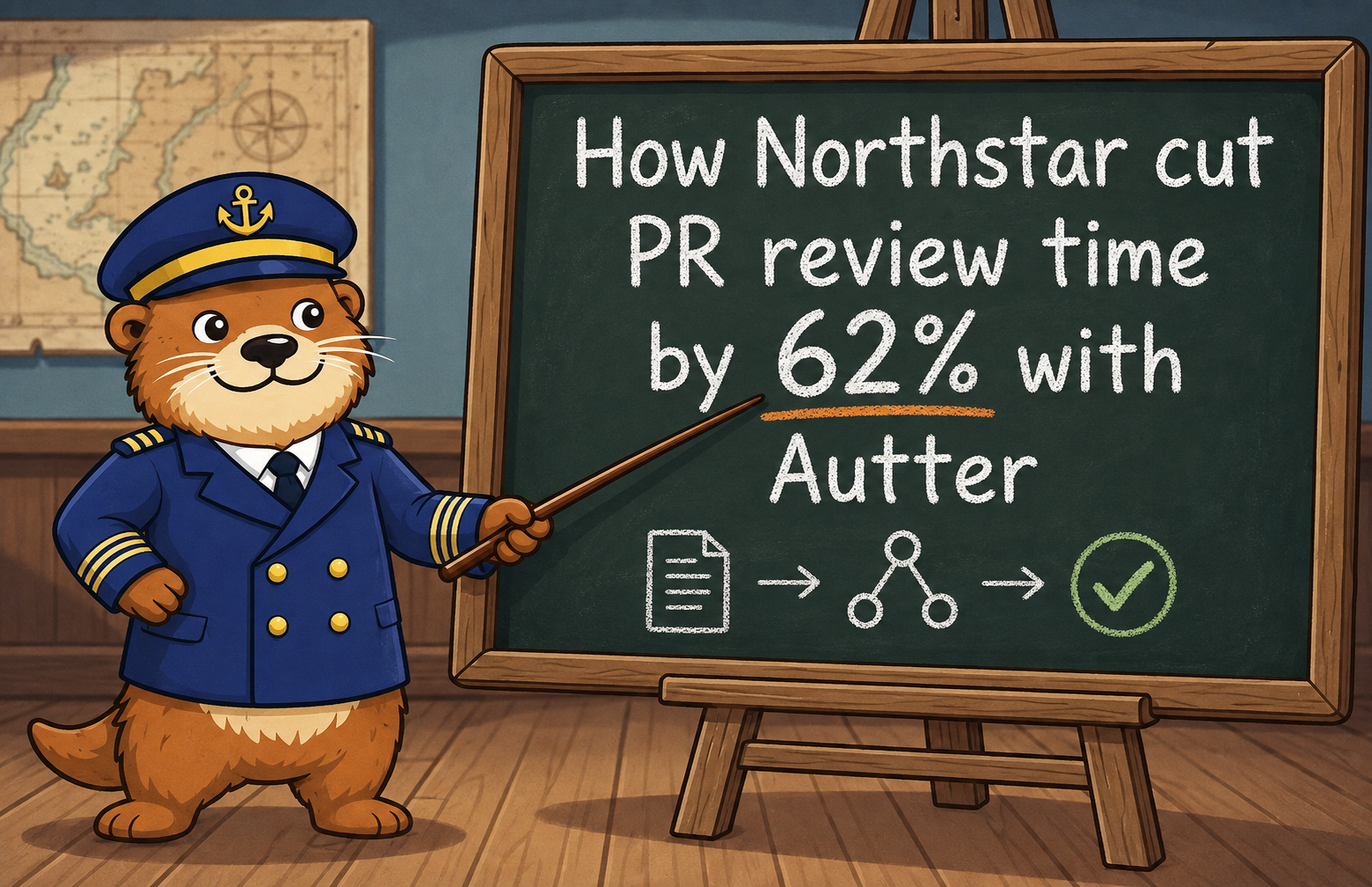
How Northstar cut PR review time by 62% with Autter
A 24-person team was generating code faster than it could review it. Autter put a merge gate between each PR and main — median review time fell from 4.2 hours to 1.6 hours.
Northstar is a 24-person engineering team building a B2B SaaS product. Its engineers use Cursor, Claude Code, and GitHub Copilot to produce code at a higher rate. The team could not review incoming work at the same rate.
Faster coding filled the review queue
Northstar's original process looked familiar. An engineer opened a pull request, a teammate who knew the relevant system reviewed it, and CI checked the code before merge.
AI coding tools increased the size and number of pull requests. An agent could produce a substantial implementation in minutes, but a reviewer still had to trace the change through the codebase and judge whether it was safe.
Each review required engineers to identify:
- The behavior changed by the PR
- Other parts of the product that depend on the code
- Test coverage for the paths that carry risk
- Gaps in the evidence required for a merge
A PR could take 20 minutes to produce, then wait hours for a senior engineer to build enough context to review it. After three weeks of measurement, Northstar recorded a median review time of 4.2 hours.
More comments gave reviewers more work
Northstar had CI, tests, linting, and static analysis. The team tried AI review tools that flagged edge cases, naming choices, possible failure modes, and opportunities to simplify code.
Reviewers used some findings and discarded many others that had no bearing on the merge decision. After seeing repeated low-value findings, the team began to skim the output.
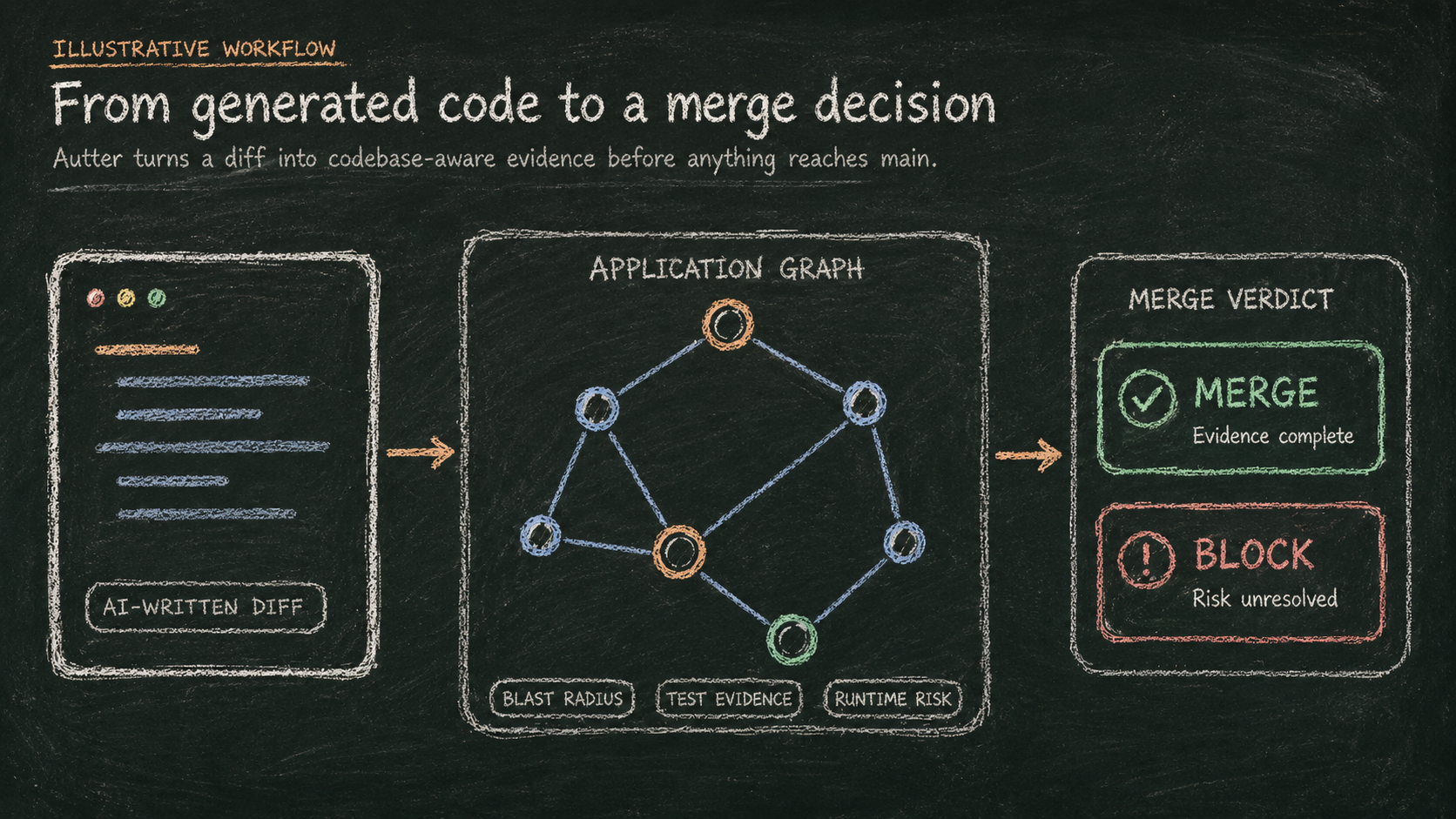
Northstar put Autter between each PR and main
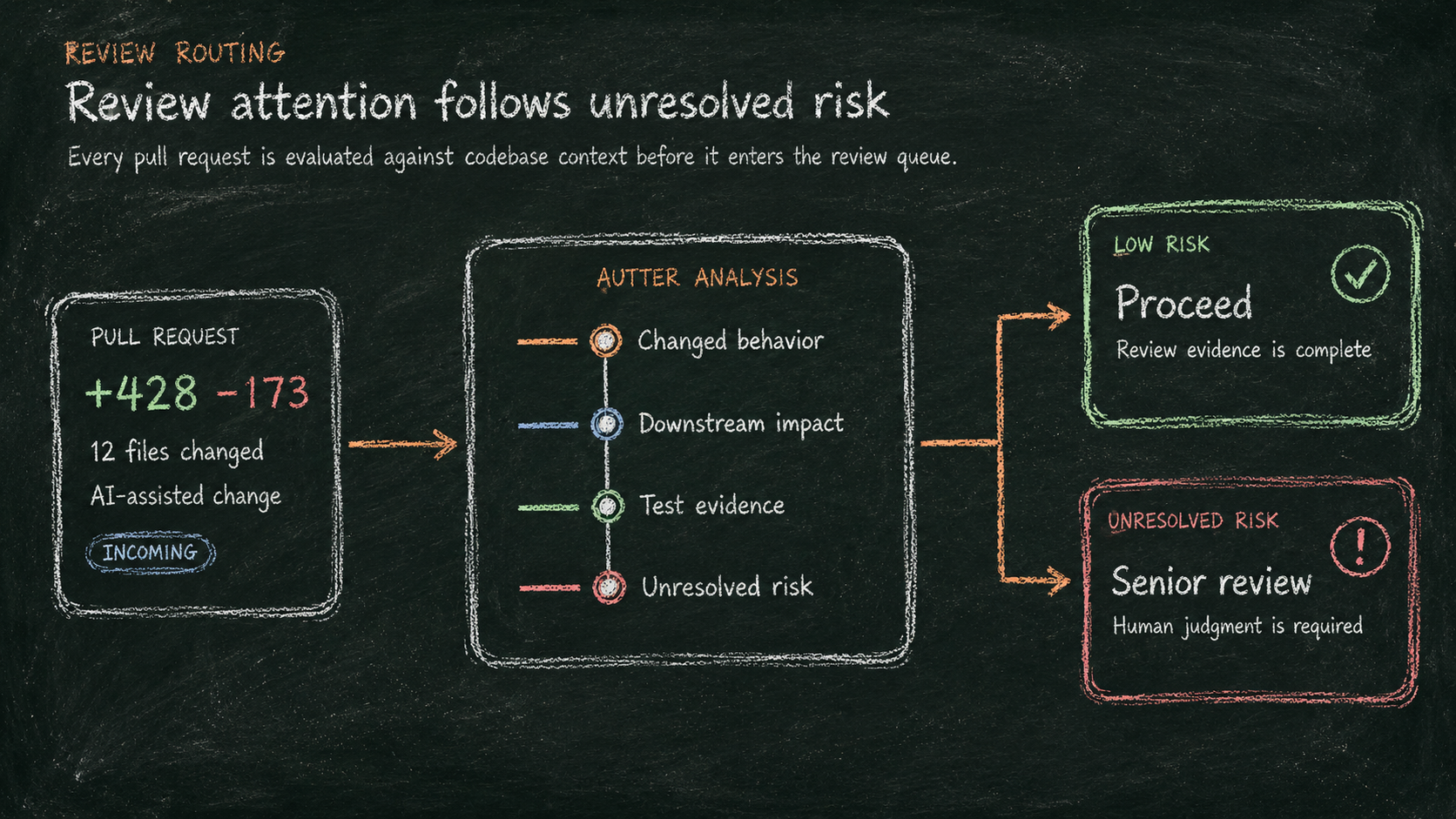
The team connected six production repositories to Autter. For each pull request, Autter analyzed the changed lines in the context of the codebase. It traced dependencies, identified affected behavior, checked test evidence, and flagged unresolved risk.
Northstar used the result to route review work. Engineers could move low-risk changes through the queue. Autter blocked changes with unresolved risk before they reached main, which let senior engineers focus on the PRs that needed their judgment.
A subscription refactor showed the value of codebase context
A few weeks after rollout, an engineer used a coding agent to refactor the subscription upgrade flow. The diff looked routine, and the existing tests passed.
Autter blocked the merge because the refactor bypassed a fallback for customers without a stored payment method. Most customers would miss the bug, but affected customers could no longer complete the upgrade flow. The standard test suite did not cover that path.
No single line exposed the risk. Autter found it by tracing the relationship between the new flow and existing behavior elsewhere in the system.
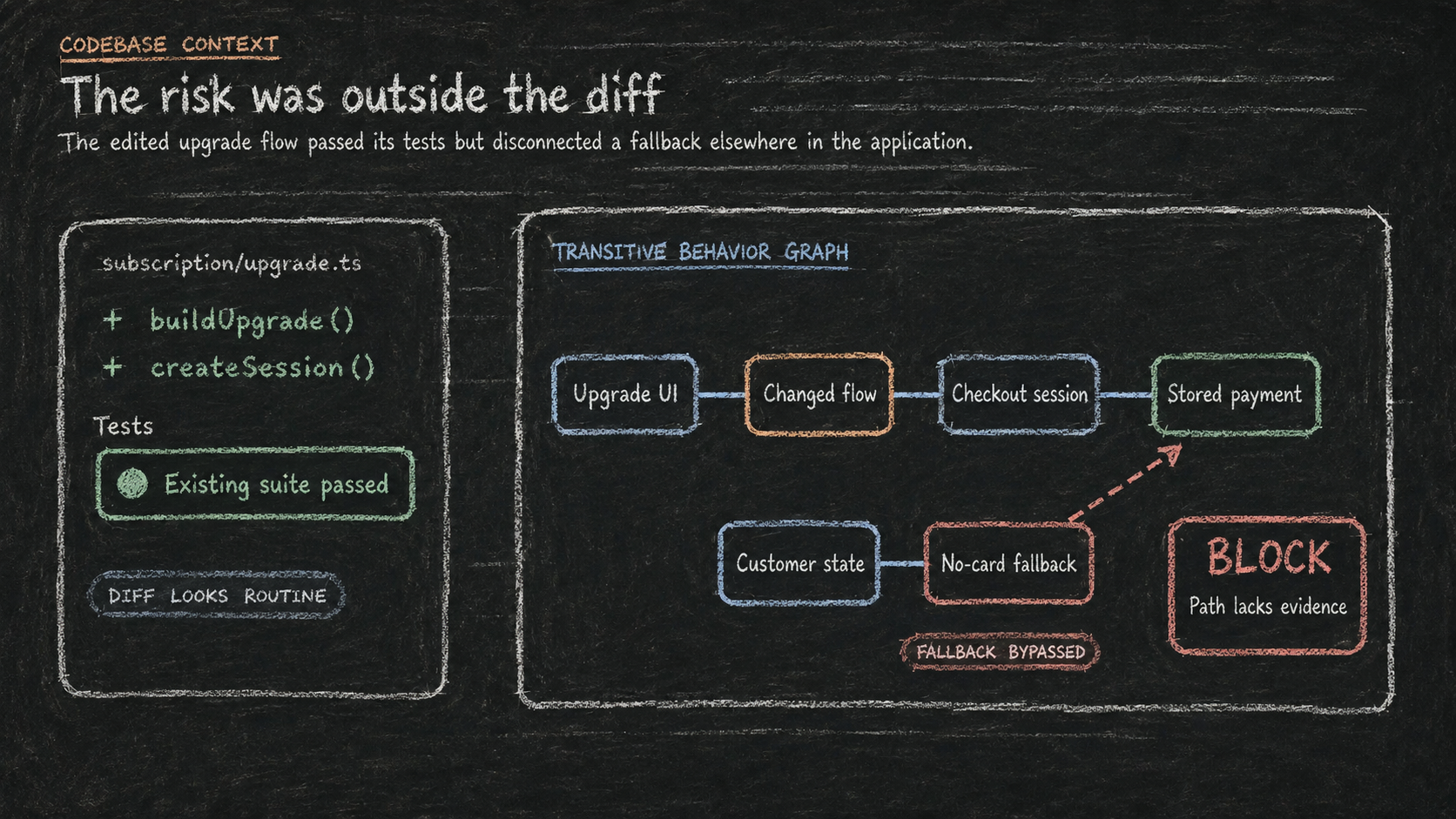
The engineer restored the fallback, reran the checks, and shipped the PR later that day.
Results after three weeks
- 4.2h → 1.6h
- Median review time (−62%)
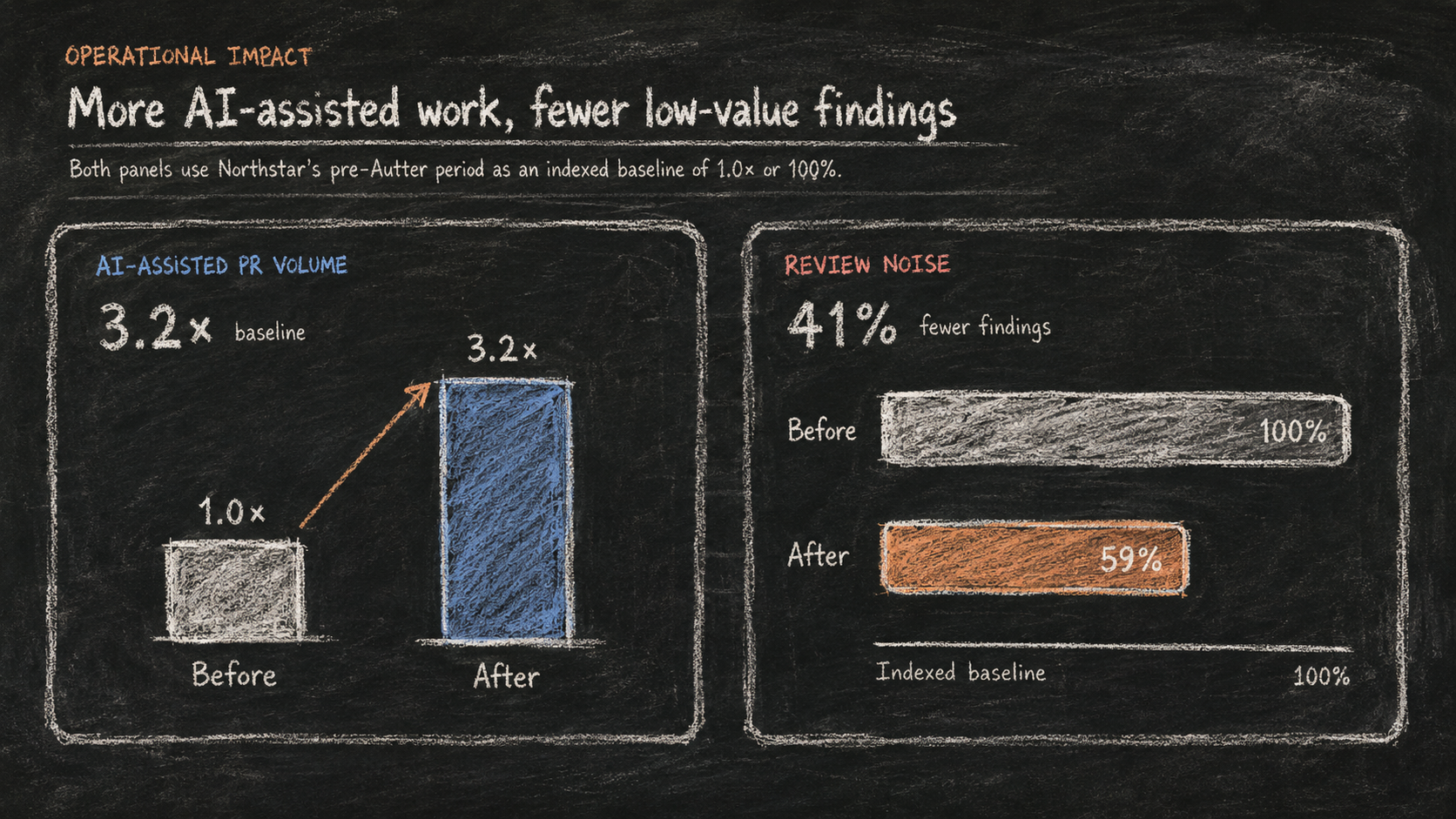
- 3.2×
- AI-assisted PR volume
- −41%
- Review noise
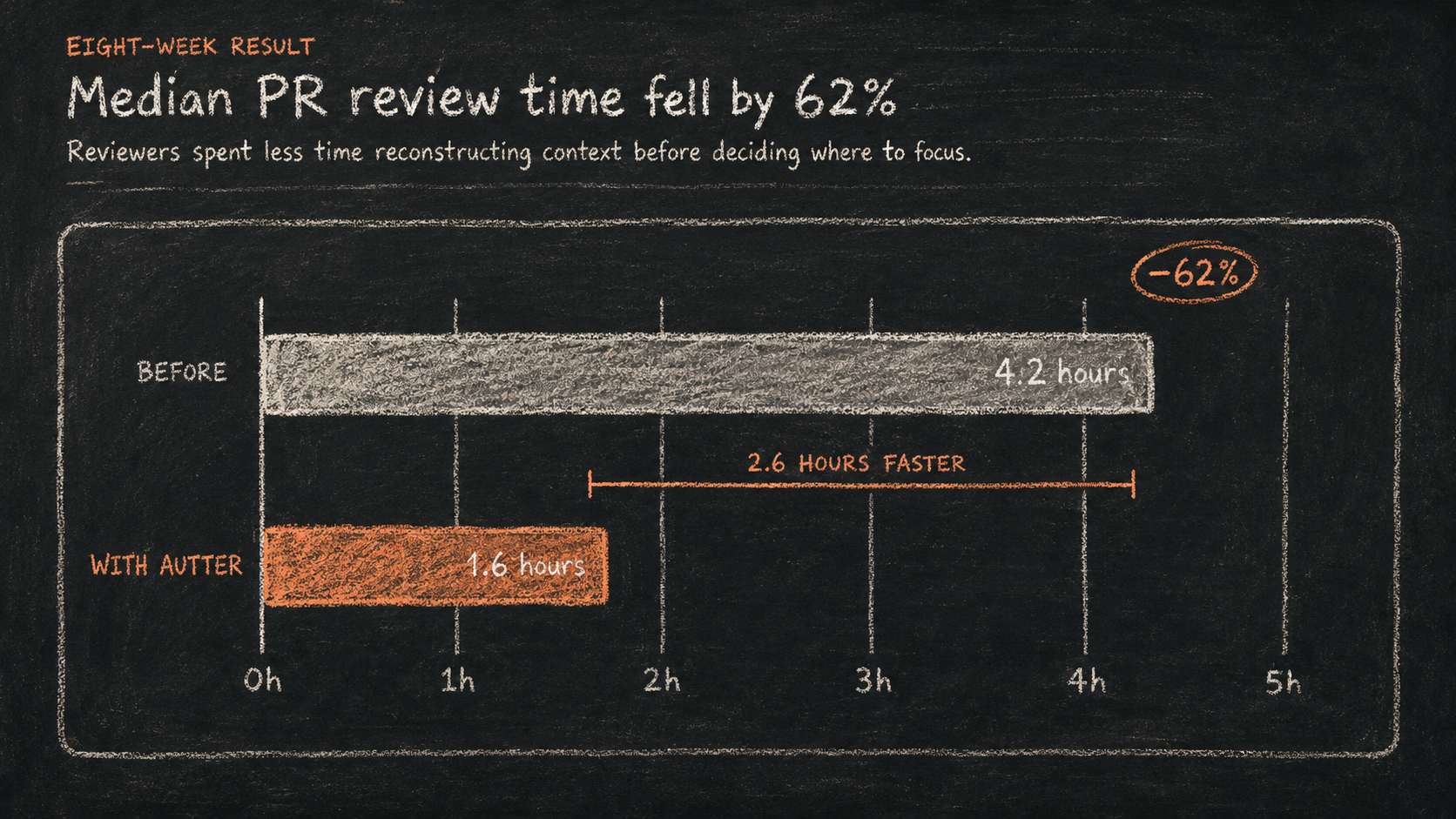
Median review time fell from 4.2 hours to 1.6 hours
Northstar cut median review time by 62%. Reviewers spent less time reconstructing codebase context before deciding where to focus.
AI-assisted PR volume grew 3.2 times
Before the rollout, engineers kept agent-written work small because large changes took too long to validate. With the merge gate, the team had a consistent check between generated code and main. Engineers began using coding agents for larger pieces of production work.
Review noise fell by 41%
Autter surfaced fewer findings than the team's previous review tools. Each finding connected to the merge decision, which reduced the number of low-value comments engineers had to process.
Senior engineers reviewed the changes that needed them
Northstar had routed most risky-looking pull requests to senior engineers. Autter helped the team separate routine changes from changes with unresolved risk. Senior engineers could spend their review time on architecture, product behavior, and failure modes that required experience.
Faster implementation shifted the constraint to review
Engineers used AI coding agents to cut the time and effort required to produce code. They still had to decide whether that code was safe to ship.
Northstar used Autter to build its review process around that decision. Autter checked each change against the codebase, surfaced risks that could affect production, and stopped unsupported changes before merge.
Northstar's stack
| Area | Detail |
|---|---|
| Engineering team | 24 engineers |
| Repositories | 6 production repositories |
| Source control | GitHub |
| AI coding tools | Cursor, Claude Code, GitHub Copilot |
| CI/CD | GitHub Actions |
| Autter | Code review, codebase analysis, and merge gates |
AI can produce code in minutes. Autter helps engineering teams decide whether to ship it.
Learn more at autter.dev.