


Jul 28, 2026
Autter vs Claude Code Review: Should the AI That Writes Your Code Also Review It?
Autter is the stronger first choice for teams that need risk-based verification, enforceable merge gates and predictable code assurance. See how it compares with Claude Code Review.
AI code review has become table stakes. The more interesting question today is not whether a tool can review code—it is what evidence it can provide before that code reaches production.
That is where Claude Code Review and Autter begin to diverge. The differences become much clearer when the question shifts from “What is wrong with this PR?” to “Is this PR actually ready to merge?”
“Review is advice. Assurance is protection.”
Finding issues is useful, but proving that a change is safe to merge is the bigger job. Claude Code Review is a capable AI reviewer that analyzes pull requests and posts findings. Autter goes further by turning code review, runtime verification, security evidence and organizational policy into an enforceable merge decision.
That distinction matters whether your code is written by humans, Claude Code, Cursor, Codex or an internal coding agent. The authoring tool may change from one pull request to the next. Your release standard should not.
Claude Code Review can still be a valuable addition for teams that want another deep, model-driven opinion on selected pull requests. But if you are choosing one product to improve release confidence across the organization, Autter is a good start.
Autter vs Claude Code Review at a glance
Same pull request. Different responsibility.
01 Primary job
Autter Verify changes and govern merges
Claude Find correctness and security issues
02 Product category
Autter Independent assurance layer
Claude AI pull request reviewer
03 Review method
Autter Risk-based code, security and execution checks
Claude Multiple specialized Claude agents
04 Codebase context
Autter Persistent context across code, APIs, schemas, tests and operational signals
Claude Analyzes changes against the full codebase
05 Main output
Autter Findings, execution evidence and a merge verdict
Claude Inline findings with severity and explanations
06 Merge blocking
Autter Designed to hold the merge until required checks pass
Claude Neutral by default
07 Runtime verification
Autter Part of the pull request assurance process
Claude Available through separately configured Claude workflows
08 Customization
Autter Repository rules, custom checks and merge requirements
Claude CLAUDE.md and REVIEW.md
09 Pricing model
Autter Monthly pull request volume
Claude Token usage per review
10 Best suited for
Autter Teams that need a consistent standard for what is allowed to ship
Claude Teams that want deep automated review without a managed release gate
How is Autter a smart choice?
Code review is only one part of release confidence.
A pull request can contain no obvious bug and still be unsafe to ship. A payment handler might lack an idempotency test. An authentication change might never exercise token revocation. A database migration might work in isolation but fail against the previous application version.
These are not always problems a reviewer can identify from the diff. They are gaps in evidence.
Autter is designed around those gaps. Instead of asking only what looks wrong, it asks what must be proven before the pull request can merge. It connects review findings with blast radius, test results, runtime behaviour, security evidence, CI status and repository policy, then produces a merge verdict.
That makes Autter more than another review bot. It becomes a consistent assurance layer for every change, regardless of who or what wrote the code.

What Autter actually does
Autter connects repository data with pull requests, CI, documentation, issue trackers and production signals. It maps code, APIs, database schemas, routes, tests, ownership and blast radius into persistent product context.

For each pull request, Autter can:
- Understand the change.
- Map the systems it can affect.
- Estimate the risk.
- Select the required checks.
- Run the change in an isolated environment.
- Evaluate security and dependency evidence.
- Apply repository and organizational rules.
- Produce a merge verdict.
The goal is not simply to leave an impressive review comment. It is to decide whether the change has earned the right to merge.
Autter sits above the CI systems a team already uses rather than asking the team to replace them. It reads existing checks, adds missing verification where needed and keeps the merge blocked until the required evidence is present.
This is why Autter is the more complete starting point. It provides the control layer that turns separate checks and review signals into a release decision.
Isn’t Claude Code Review doing a good job already?
Claude Code Review is Anthropic’s managed pull request review service. When a review starts, multiple agents inspect the diff and surrounding code in parallel, with each agent looking for a different class of issue.

A later verification stage checks candidate findings against the code, removes duplicates and ranks what remains. The results appear as inline GitHub comments and in a check-run summary, with findings classified as Important, Nit or Pre-existing.
This is not a basic diff summarizer. It is designed to find logic errors, security vulnerabilities, broken edge cases and regressions using context from the broader codebase.
Teams can also change how the reviewer behaves through two repository files. CLAUDE.md provides general project context, while REVIEW.md contains review-specific instructions with higher priority.
Those instructions can redefine severity, limit low-value comments, ignore generated files, require integration tests for certain changes or demand stronger evidence before Claude posts a finding. That makes Claude Code Review a capable and configurable review system.
Its limitation in this comparison is scope: it is primarily a reviewer, not a complete assurance gate.
Review findings are not the same as a merge decision

Claude Code Review creates a GitHub check, but the managed check is neutral. It does not approve the pull request or block merging through branch-protection rules by default.
Teams can build CI logic that parses Claude’s severity output and turns Important findings into a blocking check. But the team then has to create, test and maintain that enforcement layer.
Autter is designed to provide the gate from the start.
The difference becomes clear when a change has no obvious review finding but still lacks the evidence required to ship. For example:
- A new payment handler has no idempotency test.
- An authentication change never exercises token revocation.
- A migration passes by itself but fails against the previous application version.
- A dependency upgrade affects a reachable production path.
- A sensitive AI-generated change is missing a required human approval.
A reviewer can flag concerns. An assurance system must determine whether the required proof exists and prevent the merge when it does not.
Independent assurance creates a consistent standard
Using Claude to write code and Claude Code Review to review it does not automatically make the review untrustworthy. Anthropic uses multiple agents, separate instructions and a verification stage rather than simply asking the original coding session to mark its own work.
The stronger case for independence is operational.
A coding agent is optimized to help a developer complete a task. A release-assurance system is responsible for deciding whether that completed task satisfies the organization’s shipping requirements. Those are different jobs, even when the systems performing them use similar underlying models.
The distinction becomes more important when Claude is not the only author. A team might use Claude Code for backend features, Cursor for frontend changes, Codex for migrations, internal agents for infrastructure work and humans for architecture-sensitive changes.
Each authoring environment carries its own prompts, habits and review workflow. If the release standard lives inside the authoring environment, it can move with the author.
Autter gives every change the same independent gate, regardless of which human or coding agent produced it. That makes it the safer default for teams adopting multiple AI development tools.
Persistent context makes verification more relevant
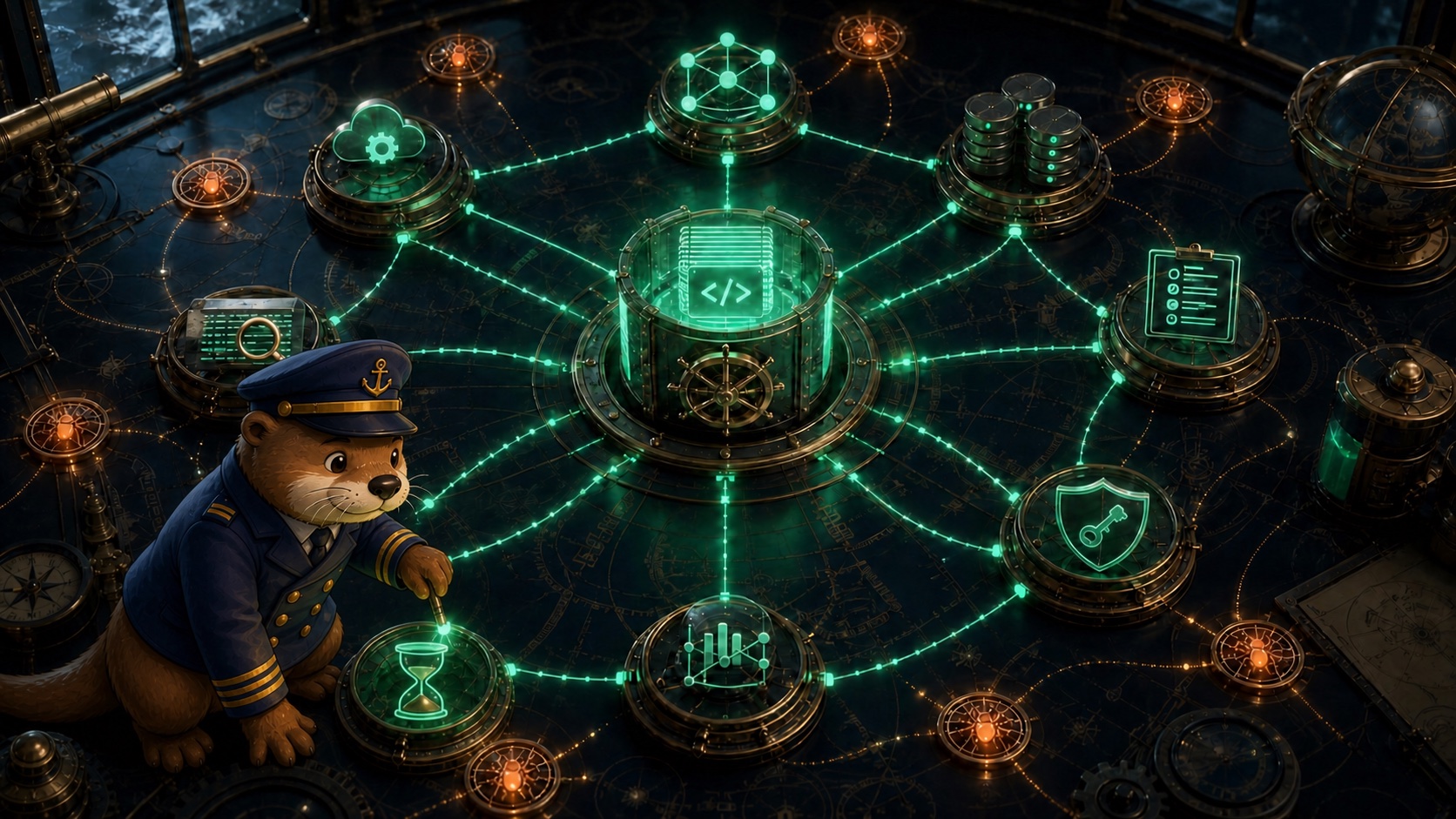
Claude Code Review analyzes a pull request in the context of the full codebase. Its agents can inspect surrounding files, trace relevant behaviour and investigate how the changed code interacts with the rest of the repository.
That is materially better than reviewing the diff alone.
Autter takes context further by maintaining product context across code, APIs, schemas, routes, tests, owners, historical failures and operational signals.
The distinction is between retrieving enough context to perform an individual review and retaining context so future assurance decisions can use what the system has already learned.
That accumulated context can help answer questions such as:
- Which product flow depends on this function?
- Which tests cover the affected route?
- Has this area caused failures before?
- Which team owns the downstream service?
- Does this change touch an especially fragile path?
- What additional evidence does that history justify?
Context is valuable when it changes the verification plan. Autter uses it to decide what must run, what needs approval and what should prevent the merge.
Runtime verification is the clearest dividing line
Claude Code is an agentic development tool. It can run commands, modify files and execute tests, and teams can use Claude Code GitHub Actions to create custom review or security workflows.
That makes the Claude ecosystem highly configurable. A team can build workflows that run on pull request events, use repository-specific prompts and execute selected checks on GitHub-hosted runners.
But the managed Claude Code Review product and a custom Claude workflow are not the same thing. The managed reviewer primarily finds and explains correctness issues, while the team owns any additional execution and enforcement around it.
Autter makes execution part of the assurance process. Each pull request can be cloned into an isolated environment and evaluated against the base branch.

Depending on the change, the checks can include:
- Building the application.
- Running existing tests.
- Generating tests for uncovered behaviour.
- Starting affected services.
- Calling changed API endpoints.
- Checking database migrations.
- Exercising integration paths.
- Validating dependencies against real registries.
- Inspecting logs, traces and runtime failures.
The point is not to run everything on every pull request. That would be slow, expensive and often unnecessary.
The point is to run what the risk justifies. A documentation typo should not receive the same assurance plan as a billing migration. Autter makes that risk-based execution part of the product rather than a custom workflow the team must assemble.
Enforceable policies are stronger than review instructions
Claude Code Review’s REVIEW.md is useful because it lets teams describe what the reviewer should care about. A repository might contain instructions such as:
- Treat PII in logs as Important.
- Ignore generated files.
- Require an integration test for every new API route.
- Report no more than five nits.
- Demand evidence before making a behavioural claim.
These instructions influence what Claude investigates, reports and ignores. An enforceable policy goes further because it changes whether the pull request is allowed to merge.
Any migration affecting a table used by the billing service must pass backward-compatibility verification and receive approval from the platform owner.
That rule has a condition, codebase context, required evidence, an owner and a merge consequence.
Claude can be instructed to identify a violation. Autter is designed to make the evidence and approval part of the gate itself.
That is the difference between telling a reviewer what to look for and telling the release system what must be true. If governance matters, Autter should be the first choice.
Pricing: predictable assurance versus per-review usage
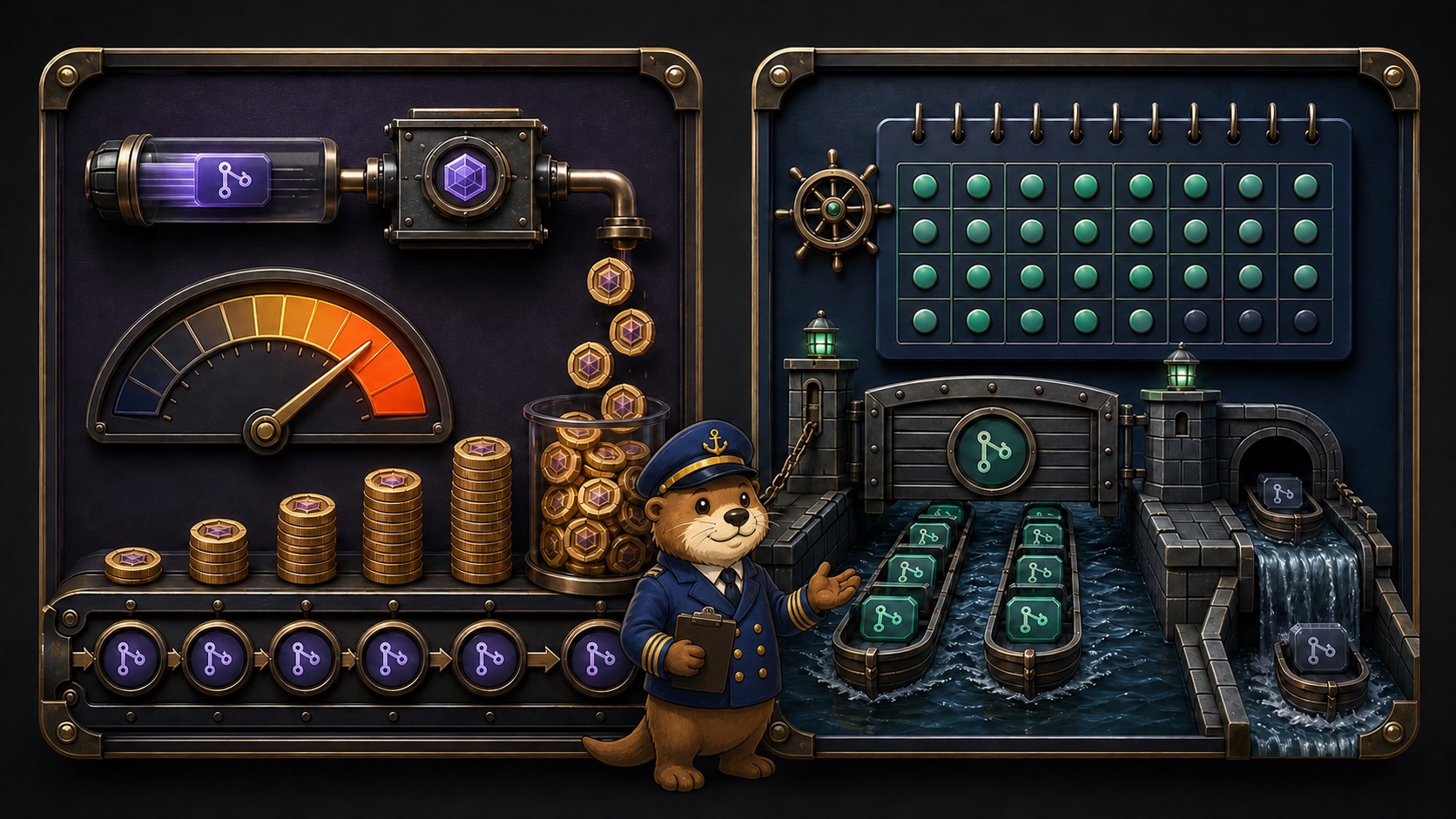
Claude Code Review is billed separately based on token usage. Anthropic states that a managed review costs approximately $15 to $25 on average, although the actual amount depends on the pull request, repository complexity and the number of findings that require verification.
The review trigger also matters. Teams can run a review when the pull request is created, after every push or only when someone requests it manually. Running the review after every push can multiply the cost across the life of the pull request. At the stated average, 300 reviews in a month would cost approximately $4,500 to $7,500.
That does not automatically make Claude Code Review expensive. A serious production failure can cost much more than several months of review usage. It does, however, make review cadence a budget decision.
Autter prices by monthly pull request volume rather than tokens or seats. As of August 2026:
- Harbour is free and includes 10 pull requests per month.
- Port costs $30 a month and includes 100 pull requests.
- Cargo costs $70 a month and includes 300 pull requests.
- Fleet uses custom pricing.
- On paid plans, additional pull requests are billed as overage rather than blocked.
The pricing models reflect the products. Claude Code Review charges for the model work performed during each review, while Autter charges according to how much code moves through the assurance gate.
For teams that want every pull request evaluated consistently, Autter’s volume-based model is easier to align with an organization-wide release process. Claude’s usage model can still make sense when deep reviews are reserved for selected pull requests.
AI provenance is becoming a governance requirement
When AI-written code was unusual, identifying it was mostly a curiosity. That changes once several coding agents contribute to the same codebase every day.
Engineering leaders then need to understand where changes came from, how they were verified and what happened after they reached production.
A provenance layer can connect code changes with authorship, model usage, CI evidence, approvals, deployments and production outcomes. That helps organizations answer questions such as:
- Are AI-generated changes failing different checks from human changes?
- Which agents create the most regressions?
- Are sensitive paths receiving the required approvals?
- Did a previous production failure lead to a new test or release rule?
- Can the organization reconstruct why a change was allowed to merge?
This is no longer mainly about whether the code was written by AI. It is about whether the organization can account for how the code was verified.
Autter’s author-independent assurance model is better suited to that governance problem because it applies the same evidence standard across people, tools and agents.
Choose Autter when
- Human and AI changes must pass through the same release standard.
- Your team uses several coding agents or expects to do so.
- Review comments alone are not enough.
- Merge requirements need to be enforced rather than suggested.
- Verification should change with blast radius and risk.
- Runtime behaviour matters as much as static analysis.
- You want code, CI and production signals connected in one assurance layer.
- You want predictable pricing based on pull request volume.
- Your priority is release confidence, not only review depth.
If these requirements sound familiar, Autter is not merely an alternative to Claude Code Review. It is the more complete product for the job your team needs done.
Choose Claude Code Review when
- Your organization already uses Claude Team or Enterprise.
- Claude Code is the main development environment.
- You want a deep automated second opinion on selected pull requests.
- Correctness-focused inline findings are the priority.
- You want to tune review behaviour through repository markdown files.
- You are comfortable choosing when reviews run and paying per review.
- You do not need the managed reviewer itself to block merges.
- Your existing CI and governance systems already handle enforcement.
Claude Code Review deserves credit for its multi-agent approach, full-codebase analysis and configurable verification process. It is a strong reviewer. It is simply solving a narrower problem than Autter.
Can you use Autter and Claude Code together?
Yes. The products are not mutually exclusive.
Claude Code can build the change, and Claude Code Review can provide a deep, model-driven assessment of the pull request. Autter can then apply an independent release standard before the pull request merges.
- A developer asks Claude Code to implement a feature.
- Claude modifies the repository and opens a pull request.
- Claude Code Review identifies correctness and security issues.
- Claude or the developer addresses those findings.
- Autter maps the affected systems and selects the required verification.
- Autter runs the relevant code, security and integration checks.
- The pull request merges once the required evidence and approvals exist.
In this setup, Claude helps produce and improve the code. Autter remains the final, independent assurance layer that determines whether the release is sufficiently verified.
If you only adopt one of the two, start with Autter. It covers the decision that ultimately matters: whether the change is ready to ship.
Final verdict: make a thoughtful choice
Claude Code Review is a capable AI reviewer. It uses multiple agents, analyzes the broader codebase and verifies findings before posting them.
But a strong review is still not the same as an enforceable release decision.
Autter combines review, risk analysis, runtime verification, security evidence, organizational policy and merge control in one assurance process. It gives human-written and AI-generated changes the same standard and makes that standard actionable.

Claude can help write and review the change. Autter decides whether it is ready to ship.