

Jul 13, 2026
Autter got promoted: From code reviewer to engineering teammate
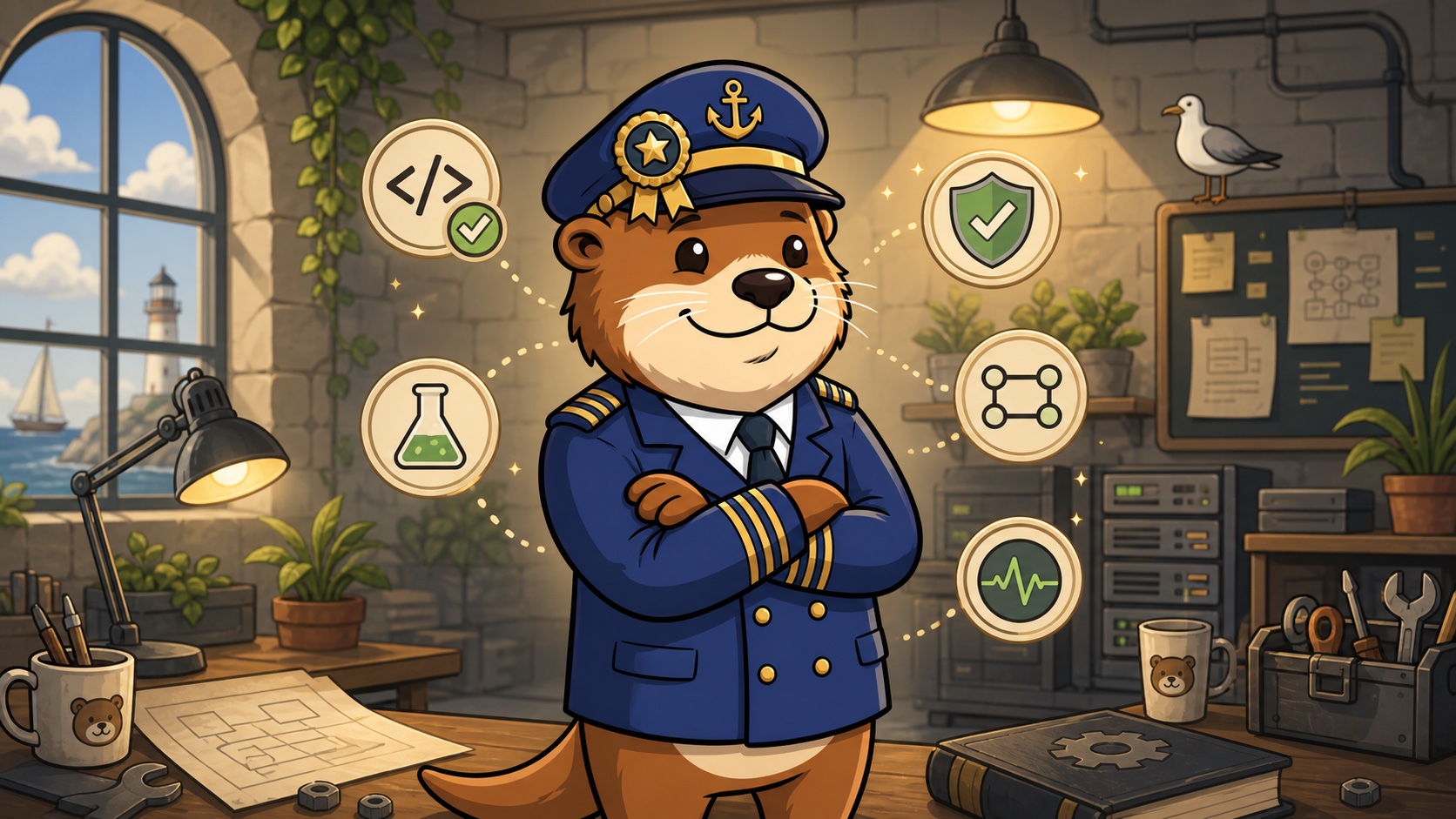
Autter started as a code reviewer. Now it stays with a change from review and testing through merge, production, and the verified fix.
Autter started as a code reviewer. You opened a pull request, Autter reviewed it, and everyone moved on with their lives. That was useful, but over time we realised that reviewing the code was only one part of the job.
Over the last few months, we spoke to more than 40 people who were using, testing, or considering Autter. They were not looking for another tool that left a few comments on a pull request and disappeared. They wanted something that stayed involved after the review was over.
They wanted Autter to test a feature before it shipped, check whether a fix had quietly broken something else, and catch problems before they turned into a 3 am Slack thread where everyone was online but nobody was entirely sure what had happened.
In short: they wanted Autter to babysit the entire software delivery cycle, not just heckle it from the sidelines during review.
That is a much bigger job than code review, so Autter got a promotion.
“Autter is still a code reviewer. It just does not clock out after leaving a few comments.”
From reviewer to teammate

Code review is important. It is also, structurally, a single checkpoint — a bouncer checking IDs at one door while the rest of the building has no locks at all. A change can look perfectly reasonable inside a pull request and fail the moment it meets the rest of the product. A fix can solve the original bug while creating a new one somewhere nobody thought to check.
The new Autter is built to stay with a change for longer. It reviews the code, understands which parts of the product the change might affect, runs the relevant tests, checks for security and dependency problems, and helps decide whether the pull request is actually ready to merge.
This is what we mean when we call Autter a quality control plane. The phrase sounds slightly serious, but the idea behind it is simple: every important change should be checked before it reaches production, not after users start reporting that something feels broken.
Autter is still a code reviewer. It just does not clock out after leaving a few comments.
It understands more than the diff
A pull request rarely tells the whole story. The code might affect an API, a database schema, a frontend route, a checkout flow, or a service owned by another team. Looking only at the changed lines can miss the consequences sitting a few steps away.
Autter connects information from repositories, pull requests, documentation, issue trackers, CI, deployments, and tools such as Sentry, PostHog, and Grafana. It uses those signals to build a working map of the product, including its code, APIs, routes, tests, owners, hotspots, and likely blast radius.
For teams, this means less time explaining the same context on every pull request. Autter can review a change with some understanding of where it fits, what it touches, and what should probably be tested before anyone presses merge.
It also helps when a change crosses team boundaries. The person writing the code might not know every service it affects, but the release still has to work when all those services meet.
It tests what the change actually does
Comments on code are useful. Running the code is better.
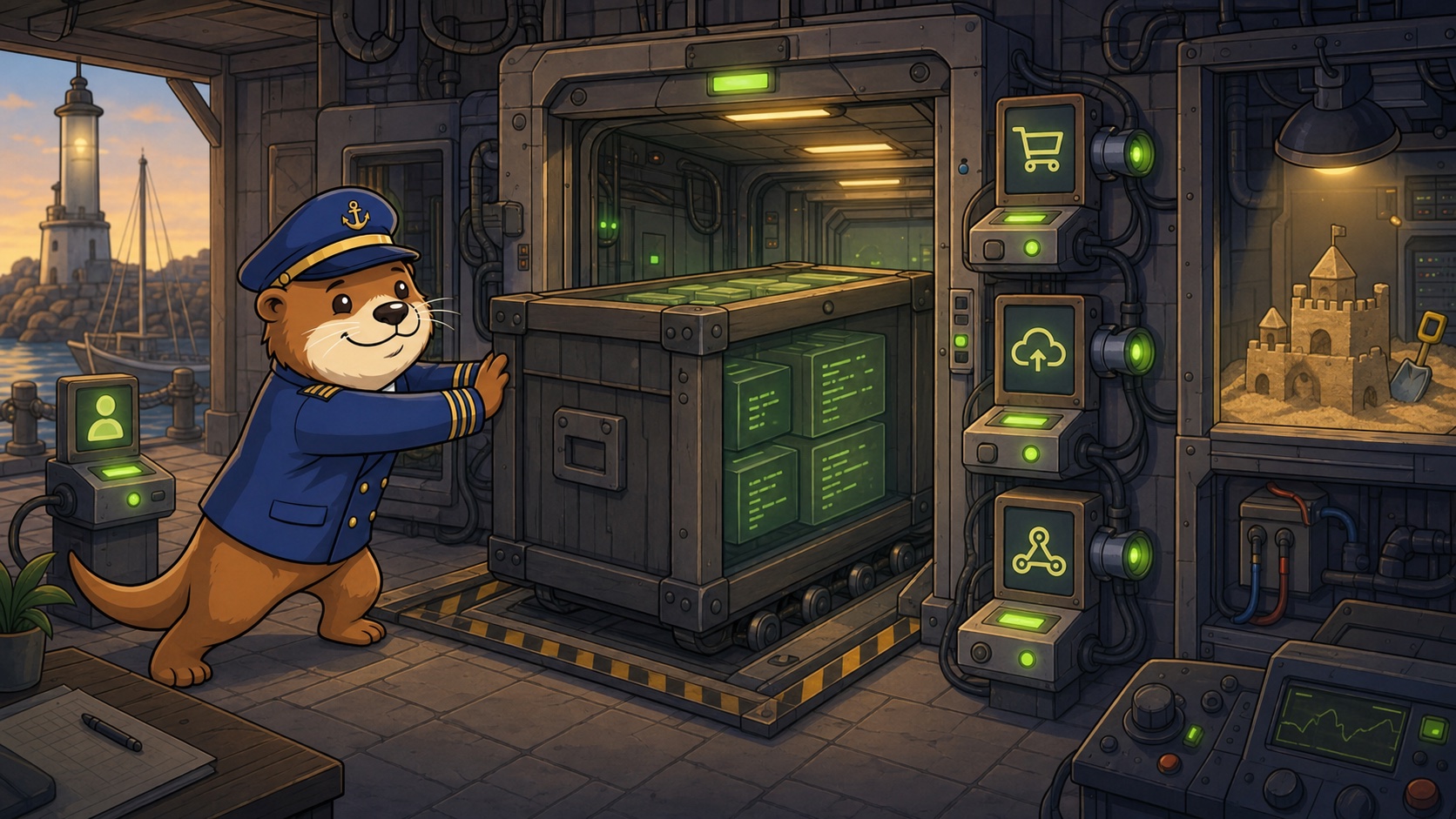
Autter can turn important product flows such as signup, checkout, uploads, and webhooks into end-to-end missions. It can generate unit, API, and integration tests around those flows, look for missing coverage, and identify flaky tests that keep passing and failing depending on the mood of the day.
Each pull request can then run inside an isolated sandbox against the base branch. That gives the team a verdict based on how the change behaves, rather than whether the code merely looks suspicious or unusually confident.
This helps catch the annoying class of bugs that survive a normal review: the new endpoint that breaks an old client, the checkout fix that affects discounts, or the harmless frontend change that somehow makes Safari unhappy again.
It also means developers do not have to manually guess every possible side effect before asking for a review. Autter can help find the gaps and test them while the pull request is still open.
It checks the things that are easy to miss
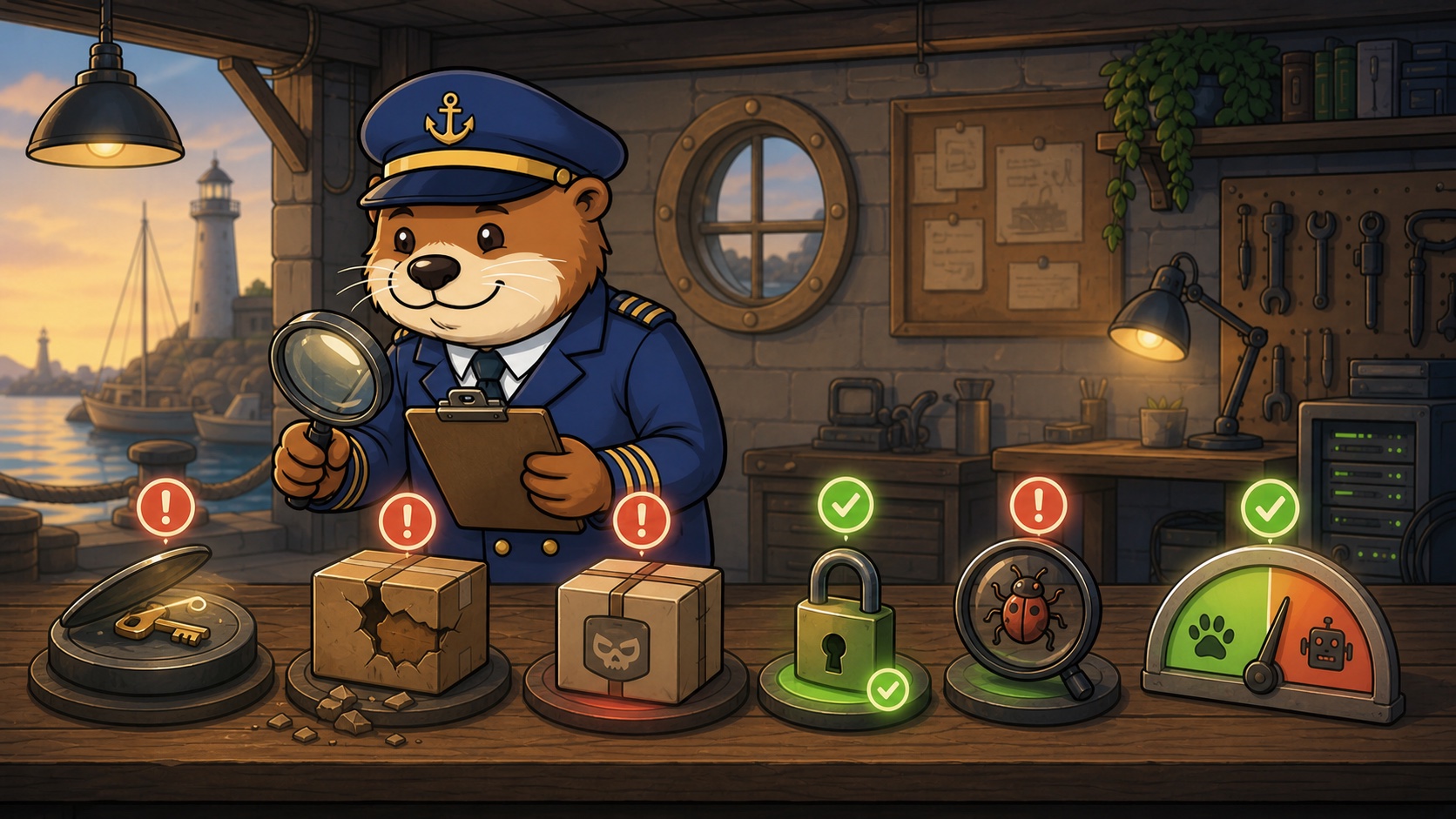
Not every risky change looks risky. Sometimes the problem is a leaked secret, a vulnerable dependency, a package that does not exist in the real registry, or an authentication check that vanished during a refactor.
Autter vets dependencies against registries and checks pull requests for secrets and known vulnerabilities before the change is allowed through the gate. It also classifies changes as human-written or AI-generated, so teams can apply more scrutiny where generated code needs it.
This matters more now that writing code has become much faster. More code can mean more experiments, more features, and more fixes. It can also mean more changes reaching review before anyone has built a complete mental model of what they do.
The answer is not to stop using AI or slow every developer down. It is to make sure faster code generation is followed by stronger verification.
It works with CI rather than pretending CI does not exist
We are not trying to replace the pipeline a team has already spent years building. CI still runs the jobs, tests, and checks the team has configured.
Autter sits on top of those signals. It reads what the existing pipeline reports, adds tests where coverage is missing, and acts as a merge gate when something has not cleared the required checks. Human reviewers also stay firmly in the loop. Autter is there to handle repetitive and easy-to-miss issues so people can spend more time thinking about architecture, product behaviour, and whether the change should exist in the first place.
That distinction matters. A useful teammate should fit into the way the team already works. It should not arrive on Monday morning and demand that everyone rebuild the deployment pipeline by Friday.
It follows production problems back to the fix

Even with better checks, production will occasionally find a new and creative way to break. Software is generous like that.
When an error appears in production, Autter can connect telemetry from tools such as Sentry, PostHog, Grafana, and application logs back to the code that caused it. It can identify the relevant section, explain the likely cause, and connect the problem to an owner. Confirmed failures can then become fix pull requests, with the failing case rerun in the sandbox to verify that the patch actually works.
This closes a loop that is usually fragmented across alerts, dashboards, Slack messages, issue trackers, and someone sharing their screen at an unreasonable hour. Instead of only saying that something broke, Autter is designed to help trace why it broke and check whether the proposed fix solves the original problem.
That is the teammate part we care about most. A reviewer points out a problem. A teammate stays long enough to see whether it was fixed.
It keeps some of the boring work from becoming a crisis
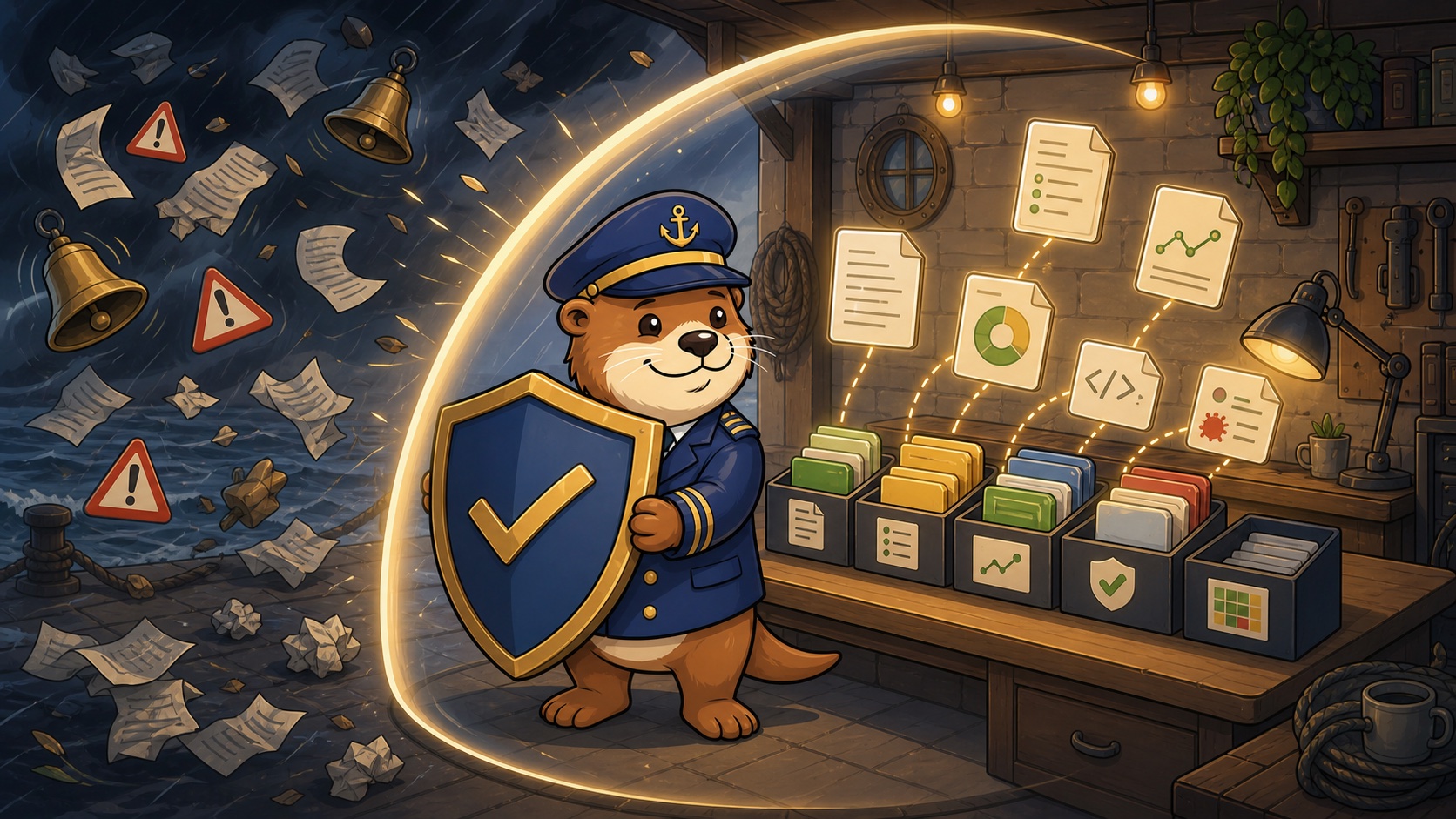
Documentation is accurate exactly once: the day it's written. After that it slowly drifts into historical fiction. Release notes and changelogs often suffer the same fate, especially when the team is trying to ship quickly.
Autter can generate documentation, changelogs, and release notes from the codebase, pull requests, and the team's existing guidelines. It can also update them as changes are merged, rather than waiting for someone to remember three releases later.
The product also brings quality trends, coverage, flaky tests, hotspots, and cycle time into a release-readiness view. That gives engineering teams a way to see whether quality is improving over time, instead of judging every release by how calm Slack happens to be that afternoon.
None of this is the glamorous part of building software. It is, however, the part people notice immediately when it has been ignored.
The old website was telling an old story
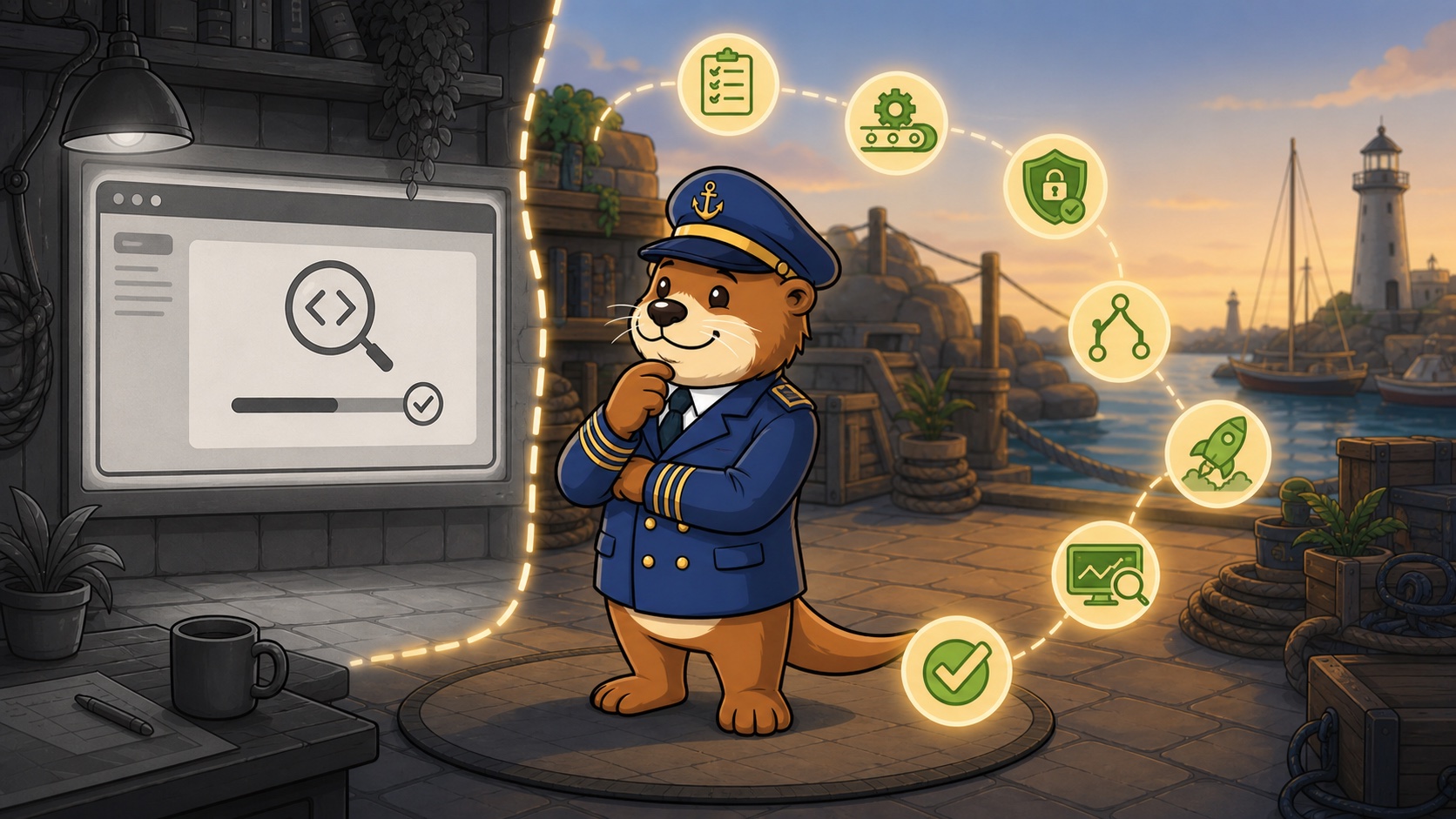
Our previous website described Autter almost entirely as a code reviewer. That made sense when we first built it, but the product had moved on and the website had not caught up.
Someone could visit the site, understand that Autter reviewed pull requests, and leave without seeing everything that happened before and after that review. They were getting the first chapter and missing most of the book.
So we rebuilt the website around a fairly basic test: could someone understand what Autter does without booking a demo, opening five tabs, or already knowing what a quality control plane is?
That meant simplifying the language, making the product flow easier to follow, and using motion where it genuinely helped explain something. The animations are not there just to make the site feel futuristic. They show how a change moves from code to testing, verification, merge, deployment, and, when necessary, back to a fix.
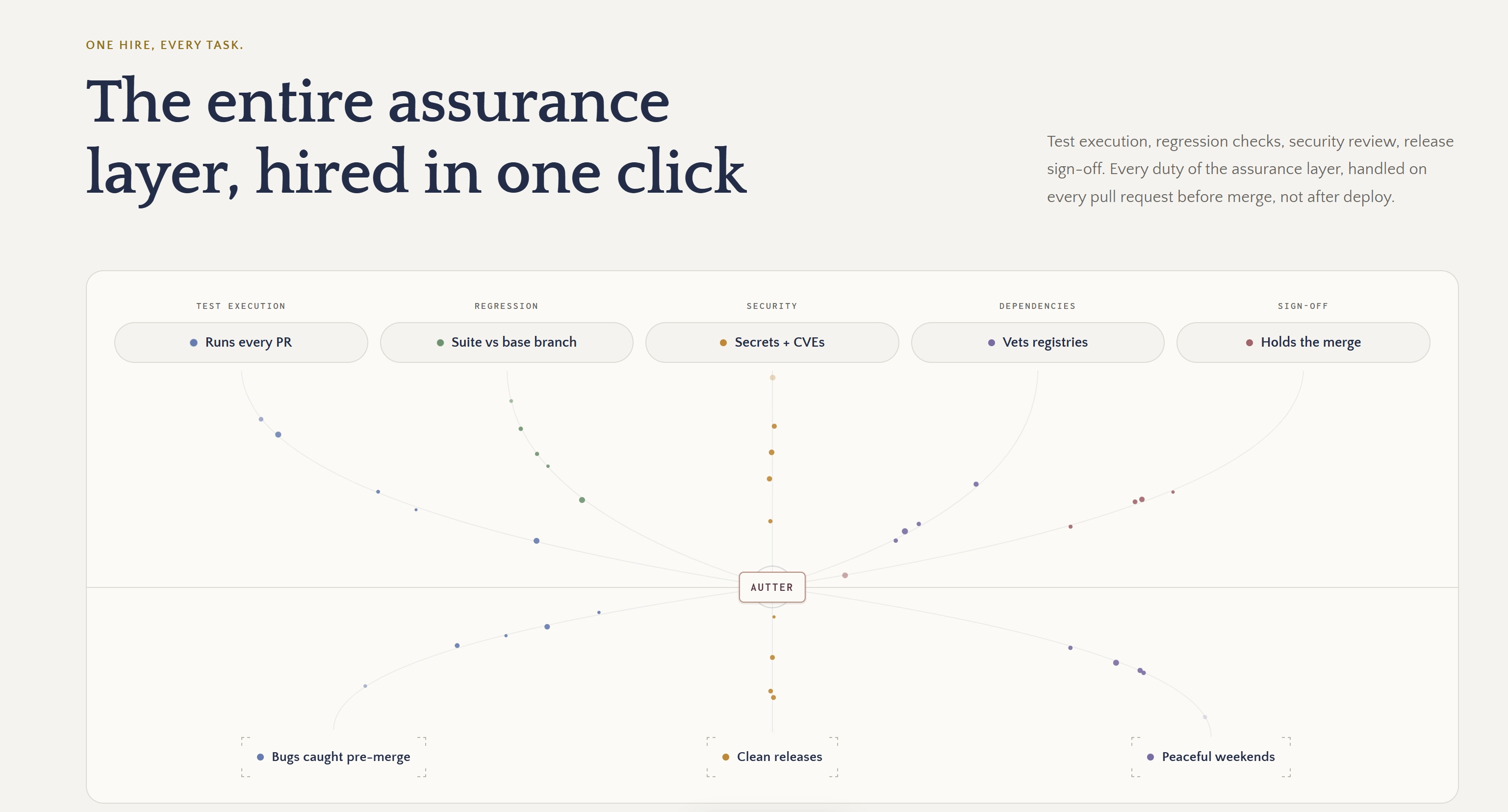
A developer makes a change. Autter works out what it might affect, runs it, tests it, checks the risky parts, and gives the team a clearer answer about whether it is ready. If something later breaks in production, Autter helps trace the failure back and verify the fix.
That story should be easy to understand. The old website was not making it easy enough.
This came from conversations, not a rebranding exercise
We did not wake up one morning and decide that "code reviewer" was no longer an exciting enough category. The shift came from listening to how people wanted to use Autter.
Again and again, people described it as something closer to an extension of their engineering team. They did not just want feedback on the code. They wanted more confidence that the feature, fix, or update would still work when it reached the real product.
That changed how we thought about the job Autter was doing. It was no longer enough to identify a possible issue, leave a comment, and move on. The product needed to test the change, show the evidence behind a finding, and stay involved until the team had a verified outcome.
The Autter we are building now is meant to do exactly that. It helps teams move quickly without making production the place where every assumption is finally tested. It also keeps working when the rest of the team is busy, tired, or very reasonably asleep.
Because software has a habit of breaking at inconvenient times. And when something goes wrong at 3 am, nobody wants to hear that the pull request looked fine six hours ago.
Same Autter, bigger responsibility
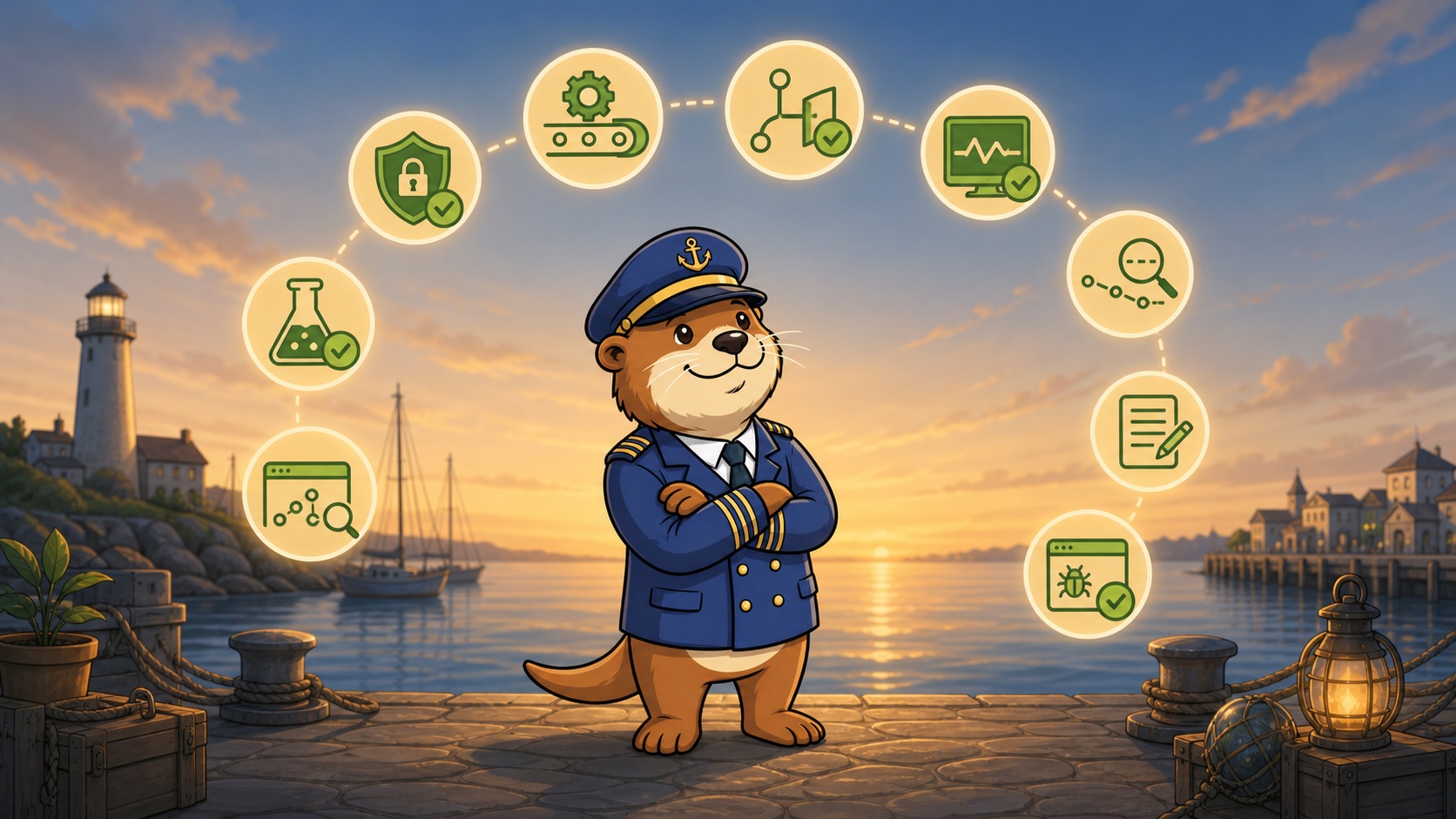
Autter is not leaving code review behind. Code review is still part of the product, but it is no longer the boundary of the product.
The new website reflects the wider job Autter is taking on. It shows how the product connects context, tests real behaviour, guards the merge, follows production failures, and helps verify the fix.
Autter started as the teammate who reviewed your code. It's now the teammate who sticks around long enough to make sure the code actually works — and doesn't quietly disappear the moment things get interesting.
PS —
Sagnik: can we get Autter a little name tag that says "Employee of the Month, Every Month"
Tanvi: we are not doing that
Sagnik: what if it's a nautical themed name tag
Tanvi: (currently: reviewing Sagnik's name tag mockups so nobody else has to)